← Back to Objects

Cigarettes

ID: 19
Location FoundCollected where Abingdon Street joins Canal Street, outside G-A-Y and New Union Pub. From a slightly more out-of-the-way spot on the Street where it would make sense that people go to smoke.
StreetCanal Street/Abingdon Street

Description

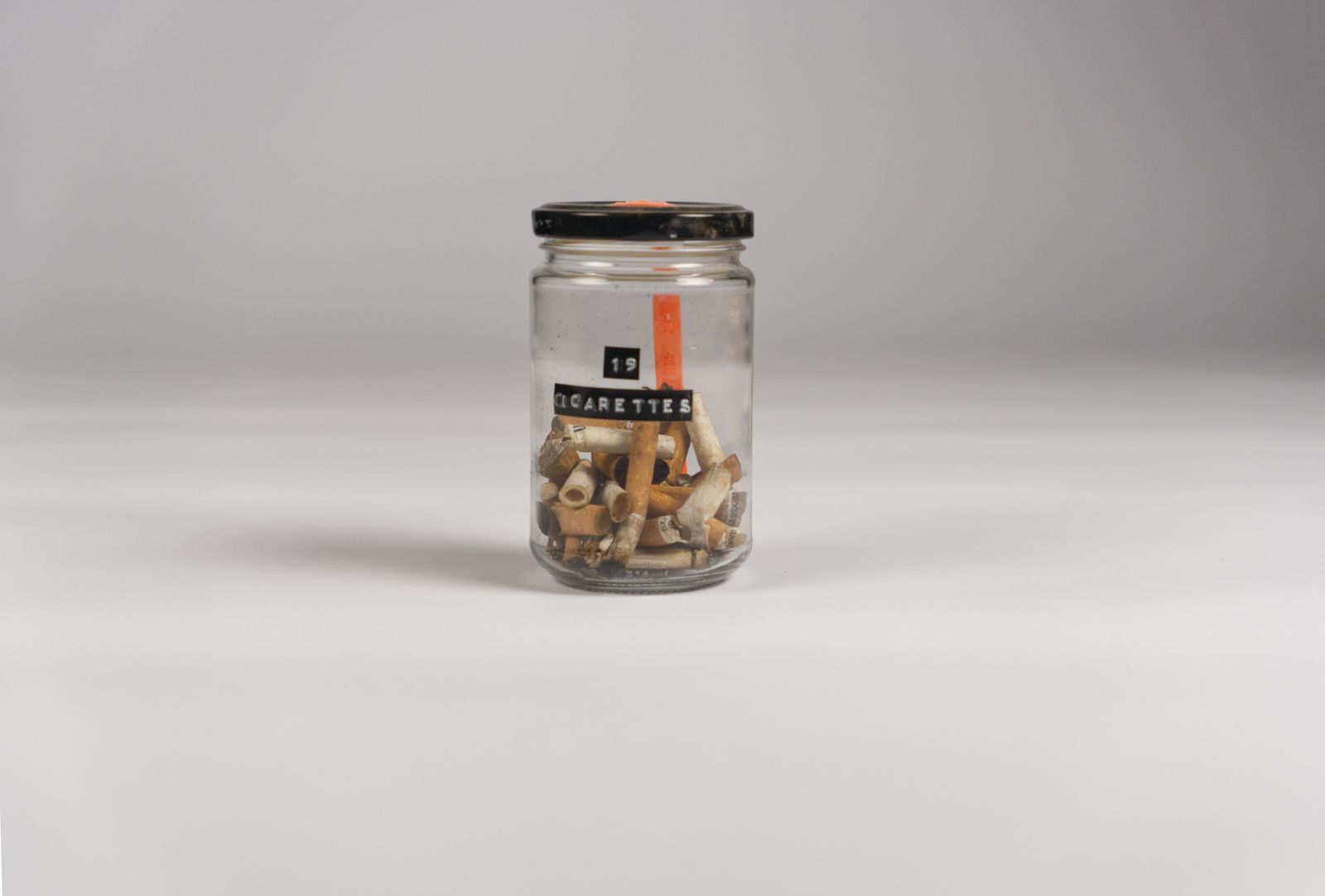
A good handful of discarded cigarette butts, in various stages of "smoked", collected from the ground on Canal Street.

Materials

Curator's Notes

I'm not going to lie: this was an especially weird thing to collect. Sometime in the summer of 2024, in the morning when the sun had not yet baked the streets to dust, you would have seen me looking shifty on a corner in Canal Street collecting the leftovers of the night before. I was, don't worry, wearing gloves. Cigarette butts are the most commonly discarded type of waste. It's an unfortunate quirk of human behaviour; cigarettes are small and easy to drop, there are not enough bins/ashtrays, or people just think they are biodegradable and that this particular type of litter will just melt away to nothing. But, possibly obviously, this is not so. Since 2006 over 35 investigations have taken place into the impact of discarded cigarettes on both aquatic and terrestrial wildlife, and the results have never been good. So what about these little things is so deadly? What about cigarettes makes them the perfect storm of harm to pretty much everything? This is pretty simple. As an incomplete list, cigarettes contain, in no particular order: plastic (=microplastics), ammonia, butane, arsenic, lead, tar, formaldehyde, acetone, aceric acid, cadmium, and nicotine. When all this is burnt one of the things they produce is carbon dioxide. This is as well as paper and tobacco, both of which seem pretty normal amongst everything else I've just listed. Many of these ingrediants are gross and a bit weird, but I'm not here to deliver an anti-smoking sermon. I'm here to chat about out how this assemblage of materials interacts with us, and the world. And an interesting perspective to take on smoking is to see the human smoker (the human who smokes, not someone who smokes humans- weird but not unheard of: get in touch if you want the details) as part of the assemblage. In New Materialism the assemblage is any grouping of human and non-human elements, including objects and ideas. Assemblages are not static, they shift and change; things peel off, fall away, are used up etc. Humans move, non-humans move; the whole process is fluid and dynamic. Go one step further into this theory and you'll come across the idea that agency is therefore not limited to humans alone. Instead it is distributed across the things that make up the assemblage. Essentially, the non-human parts of our world, sentient or not, have the power to influence human actions. I wonder if you can see where this is going with cigarettes. First there is the addictive quality of nicotine. There's plenty written on the process, medicalisation, and philosophy of addiction, and there's no time to go over it here. The key takeaway is that nicotine is a non-human part of the assemblage of cigarette and human that has power over the human. Whether that power is psychosomatic, biological, or supernatural (probably not that one to be fair) is irrelevant for us here; the point is that it exists. Then there's the physicality of the cigarette itself. A small tube, satisfying to hold, it facilitates ritual behaviour. And this is not even including the lighter, with its tactility and pleasing ability to summon fire. And then there's the strange combination of chemicals listed above, many of which are added to engineer a particular feel, smell, taste, burn time, and sensory experience to keep the consumer coming back for more. Butane is a flavour enhancer, aceric acid lowers smoke pH and makes it easier to inhale deeply, arsenic and cadmium are absorbed by the tabacco plants themselves from the soil, fertilisers, and pesticides. All of these things interact with the human body when they are inhaled in a process that involves yet another element: air. For what is smoking without air and the interactions between air and the human body. Ultimately, cigarettes are things that have embedded themselves in our world and in our behaviours. The experience they create in the human user is driven by their materiality and physical properties. These same physical properties continue their influence after the cigarette has been discarded in the wider environment.