Curator's Notes
“Everything that is, can be destroyed” [Massimo Leone: “On Broken Glass: For a Semiotics of Anti-Materiality”].
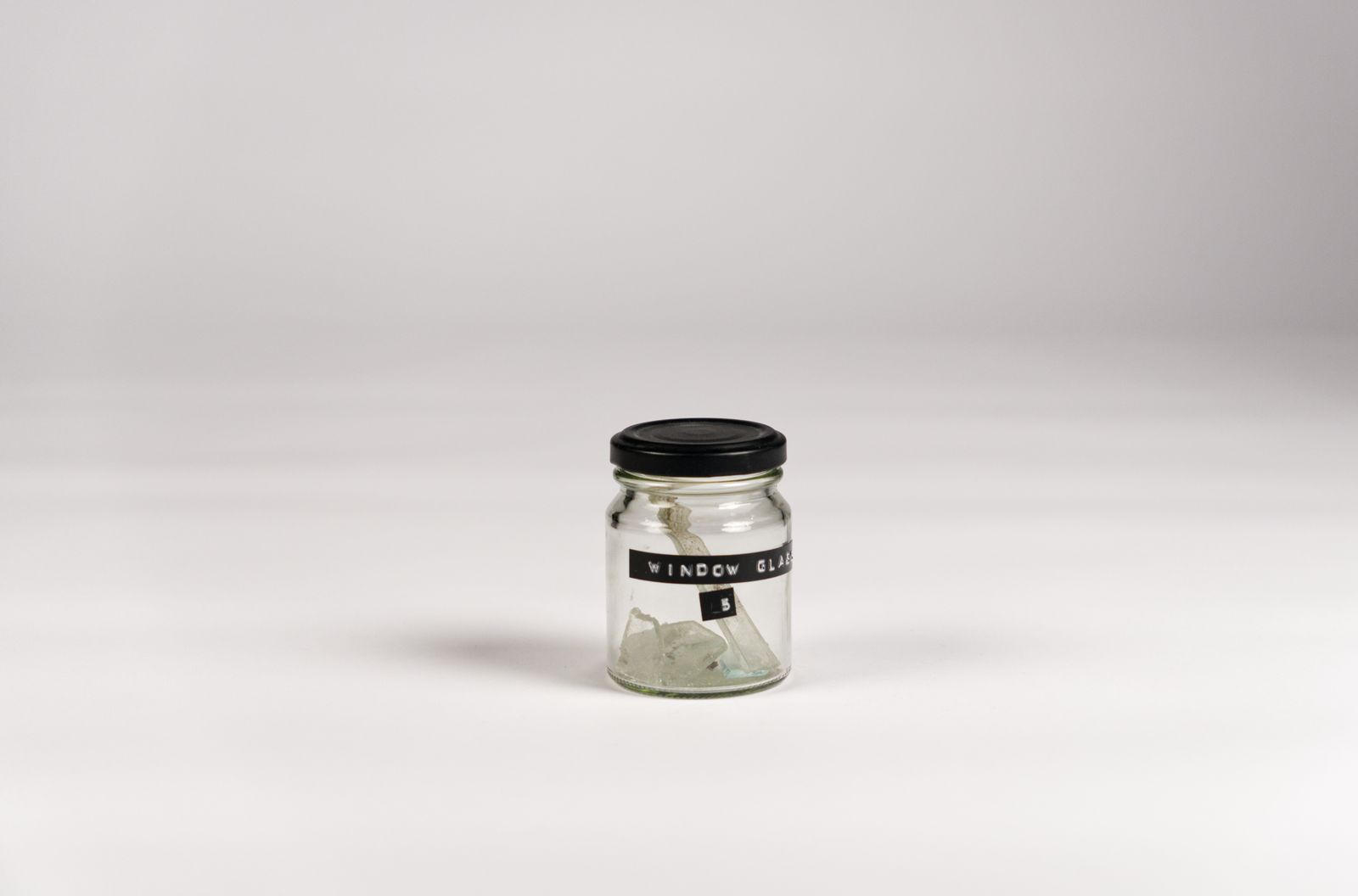
“Don’t cut yourself on that edge you’ve got there” I mutter to myself as I pick up broken glass, in a clear subversion of that idiom’s internet meaning [which is a sarcastic response to edgelord behaviour].
The Broken Window Theory from 1982 is still controversial in modern criminology. The idea that a disordered environment causes disordered behaviour has been largely disproven, but questions still remain about how the environment influences health behaviours and outcomes.
Whatever the research says I suspect its fair to point out that broken materials still give us the “ick”. Especially broken glass. With its dangerous sharpness, and its longstanding cultural associations with urban decay and deviant behaviour. It doesn’t matter if the urban decay and deviant behaviour is not real, the point is that broken materials influence our perception of a space and, more alarmingly, the humans within that space.
Broken glass has an “anti-materiality”: its initial meaning has been rearranged but not lost. Glass as an intact window represents order, and the reason that broken glass has such a strong meaning is because there is the memory of that order within it. If that order had not existed in the first place, then would its disruption mean as much?
We live in a world where things decay around us in ways that we may, or may not, notice. And this decay has meaning because it comes from order. If I knew anything about physics I’d make a pithy comment about entropy here. But I don’t. So I won’t.