Curator's Notes
Scaffolding grows all over the city. It's like it's organic, coating buildings like moss-- or maybe like spider webs. It appears one day, hangs around, overstays its welcome, and disappears in a noisy convulsion. The etymology of "scaffold" begins around the mid-fourteenth century: the English word originally comes from the vulgar Latin "catafalicum". This, in turn, comes from the Greek "kata" [Medieval Latin sense of "beside, alongside"] and the Eruscan "fala" [meaning "scaffolding, wooden seige tower"]. To get to us as "scaffold" it also went via an Old North French varient "eschafaut". By the late fourteenth century the English term scaffold was used in reference to the theatre -the stage. By the mid fifteenth century it was where you went to get your head cut off. At some point it lost that grisly use and is now the name of a ubiquitous urban phenomenon [1].
So now you know, and can promptly forget, where the word comes from. But what does it mean. Scaffolding is a shroud [according to a friend of Wanda Stauven, whose work I leaned on to write this], which has a pleasing morbidity to it. But it doesn't hide death, it hides transformation. It hides the movement of materials, the shifting of bricks and mortar. Maybe therefore a better word would be "cocoon". It is part of the constant regeneration of the city, facilitating either the renewal of old buildings, or the construction of new ones. Throwing up scaffolding creates places for humans where there were none before [spiderman isn't real- you'll need scaffolding to fix that building facade- you can't just cling to a window ledge]. Scaffolding magically creates something that is somehow both fluid and solid; a temporary structure that will be reborn as something else, somewhere else.
And let's think about the forces that put scaffolding in place. Obviously there are the scaffolders themselves. The chaps in high vis with apparently no fear of death. But then you've got the invisible hands that guide it's appearence and disappearence: construction companies, architects, politicians, subcontractors, and of course, the buildings themselves. When an old building needs a facelift, you could say that it is those decaying materials that summon the scaffolding. Are humans being proactive or reactive? [I'm sure there are conservation experts who could tell me- hit me up if you are one of them]. Scaffolding is an assemblage- not just of connectors, poles, and boards, but of human and material will.
But then you've got delays. There's a fascinating article by Alize Arican called 'Behind the Scaffolding: Manipulations of Time, Delays, and Power in Tarlabaşı, Istanbul' in which she describes scaffolding as having "lingering, extended modalities of time". Delays become a hitch that takes urban space out of the hands of people, and into the hands of everyone behind the scenes I mentioned above: you're forced to navigate it on the pavement, it takes up visual space, it can be an "eyesore". In some respects, scaffolding is a representation of how little control people who live in, and move through, the city actually have over their environment.
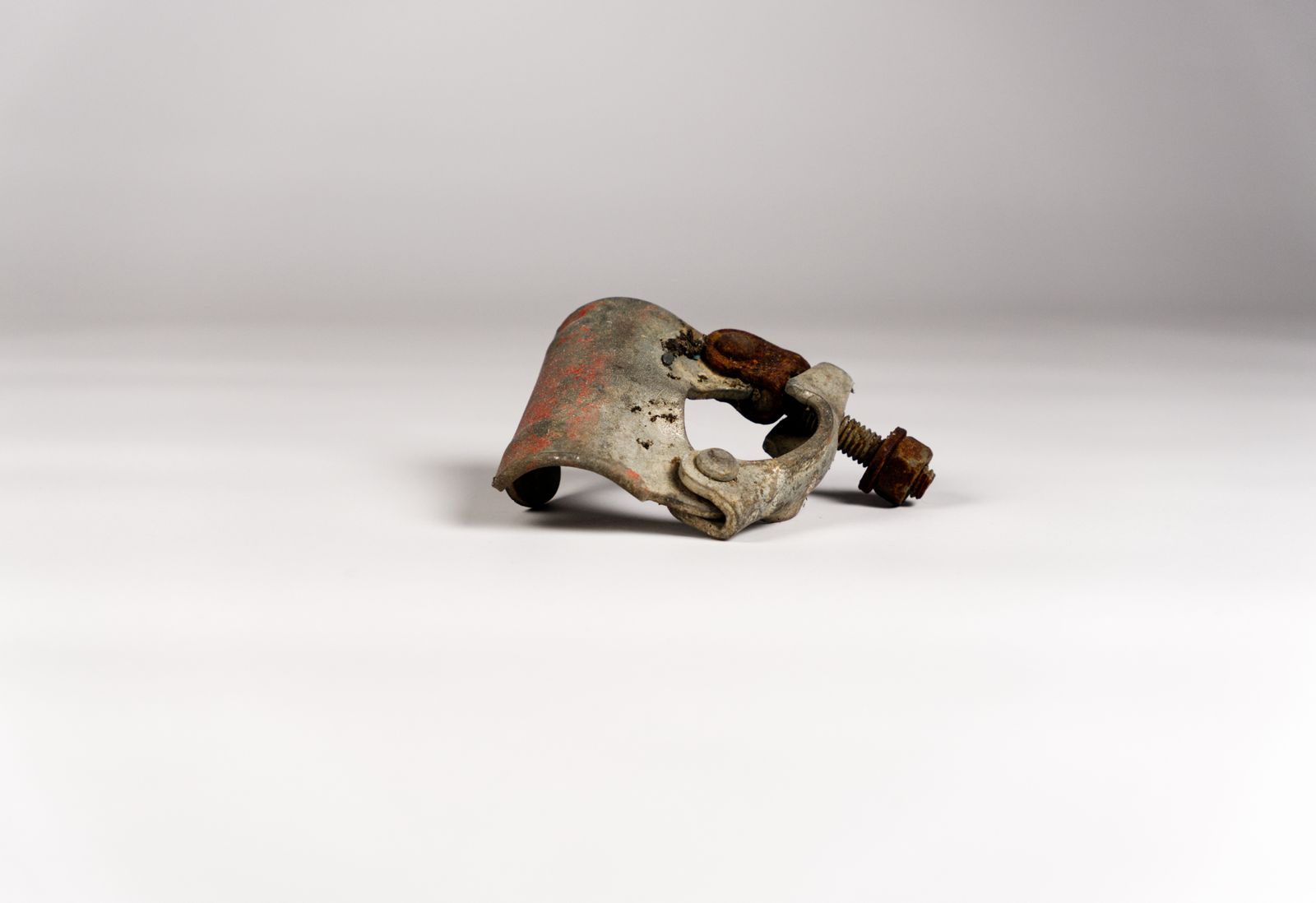
Think about it all next time you're walking down the pavement and have to dodge the "standards" or "uprights" on their "base plates".
[1] all this lovely info from an article by Wanda Stauven in a book titled "Artchae: For a Media Ar(t)chaeology of Telepresence"