Curator's Notes
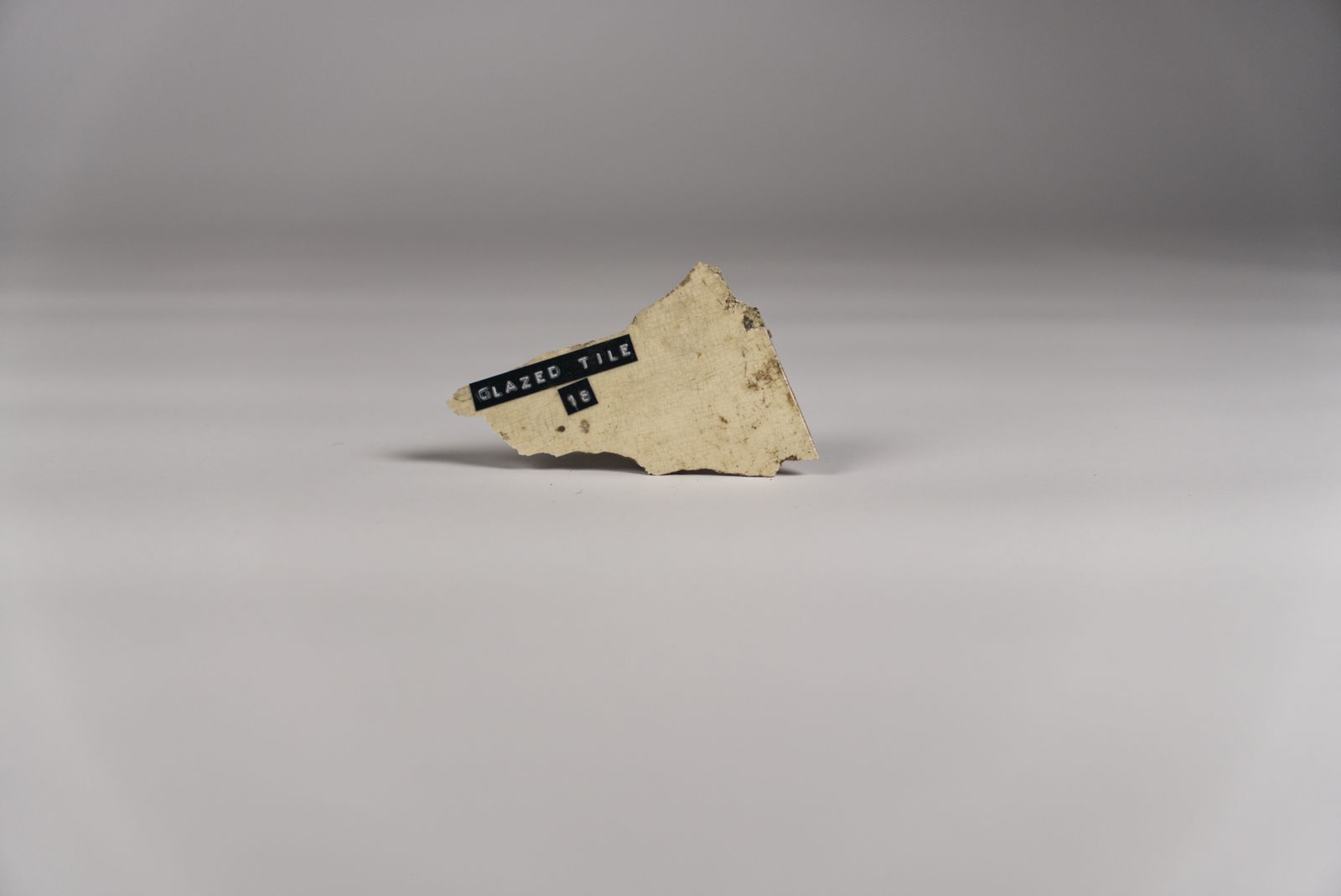
I'm not sure if rampant speculation is encouraged in museum work, so if I say that because I found this tile in Baring Street carpack (see also object 8- red brick) it might have been part of the old baths that once stood here you probably shouldn't pay too much attention. I love finding bits of tile, even really sharp pieces like this. The glaze suggests care and consideration, but the fact it’s just a small remnant of a broader aesthetic is a lovely reminder of the impermanence of all things.
“Memento mori” and all that.
There are no original Victorian tile factories still operating in Manchester itself. If you want that sort of heritage you’d need to go to Ironbridge to check out Craven Dunnill Jackfield, or maybe Stoke-on-Trent in Staffordshire to check out H&E Smith. There is a good chance that quite a few tiles in Manchester came from these places anyway.
The history of tile production has moved through time and culture: from Babylonian polychrome bricks, Egyptian faience, and Roman terracotta, to Chinese roof tiles, Islamic wall tiles and Gothic inlaid floor tiles, to Hispano-Moresque lustre tiles and the maiolica tiles of the Renaissance and Baroque periods [that’s a list from a book called ‘5000 Years of Tiles’ by Hans Van Lemmen- got anything to add to it? Let me know].
As with many things it was the good ol’ industrial revolution that changed tile production, turning them from exclusive to mass produced. Mass production often gets a bad name, but tiles are practical and can be beautiful, so I’m sure that making them more widely available was broadly positive.
And I could write more about that, and maybe I will at some point. But for now I’ll leave you with a quote from non other than Nebuchadnezzar II found inscribed on the Ishtar Gate, 602-562 BCE:
“I pulled down these gates and laid their foundations at the water table with bitumen and bricks and had them made of bricks with blue stone on which wonderful bulls and dragons were depicted”.
So what to take from this?
Tiles: they’re old and fancy.